

The Enduring Partnership: Horses and Human Civilization
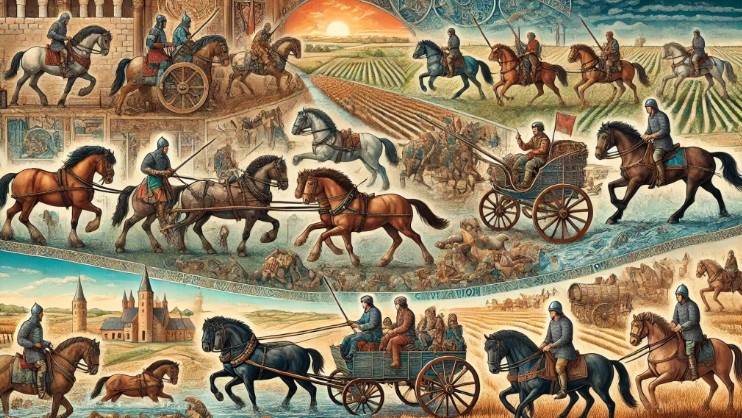
For as long as people have lived, fought, and thought, horses have been important parts of their lives. These strong, fast animals sped through the world and brought about big changes. They were used as battle allies, farm helpers, signs of wealth, and even as holy beings. In this piece, we go back in time to see how horses were used in some of the world’s oldest cultures. These horses had an impact on everything from fights to views.
Horses Arrive in Ancient Egypt
Egypt initially had horses about 1700 BCE. Hyksos invaders presumably brought them there. Donkeys did hard labor before that. Horses may now pull swift carriages into combat. Two-wheeled carts were a source of pride for soldiers and nobility. Royal tomb paintings, like Ramses II’s, depict horses tied up and clothed in beautiful attire. People seldom rode horses back then because they were too precious. Instead, they bullied the affluent, making them appear stronger. Their exclusivity worked as a sign of prestige, not unlike rare incentives such as the Bonus Blitz 200 free chip with no deposit in NZ, which also relies on immediacy and special access.
Egyptians saw chariots as supernatural force, not simply instruments. The gods like Amun cheered pharaohs as they charged into war in paintings. Because of their association with achievement and power, horses looked mystical. As Egypt strengthened, horses helped troops increase, changing warfare.
The Horse in Ancient Greek Life
Horses were used for more than just battle in ancient Greece. They also showed who was at the top of society. A horse was very expensive, so only rich people could own one. This made it a clear sign of high rank. Athens and Sparta valued horses since they were elegant and quick and regularly appeared at public occasions.
As with the Olympics, the Panhellenic Games were large. Horse races were popular. Chariot races and horseback games were big events, but only nobility participated. Even if they rented vehicles to compete, winners became renowned. People came gathered to see the greatest Greek athletes.
Greek stories were full of horses, which added to the magic. Here are some examples that stand out:
- Pegasus was a horse that could fly and was born from Medusa’s blood. He helped heroes like Bellerophon.
- The horses that the sun god Apollo used to pull his chariot across the sky every day.
- Poseidon was the god of the sea. He made horses out of waves and was connected to their wild power.
Because of these stories, horses became images of freedom, power, and God, which led to art, poems, and celebrations.
Warfare and Splendor in Mesopotamia and Among the Hittites
Horse-drawn chariots originally appeared in Mesopotamian city-state art like Sumer. Initially, humans employed wild donkeys or a combination of donkeys and other animals. Real horses altered the regulations about 2000 BCE. War and parades went quicker, making rulers seem powerful.
The mighty Hittites of Turkey went farther. Their light carts could carry two or three attackers and move rapidly. Hittites trained horses with stronger chains and bred them fierce. These stone chariots fight Egypt and Assyria. In addition to war, horses led monarchs in magnificent processions that wowed the crowds.
Hittites’ concentration on horses let them reign for centuries and spread breeding and strategic concepts to other nations.
The Rise of Cavalry in the Persian Empire
Persian horse forces were among the greatest in history under the Achaemenids. They began breeding horses for long runs and quick bursts about 550 BCE. Top riders might fire bows from horseback. This technique shocked foes with its speed and accuracy.
Horses delivered word across vast regions using a clever telegraph system, enabling Persia’s expansion. Riders changed horses at stops, speeding up conversation. Shiny and robust breeds like the Nisaean, which may have influenced the sleek Akhal-Teke of today, were praised. Kings paraded horses to show off their riches, symbolizing royal might.
Horses linked India and Egypt in daily life. This was done by promoting commerce and maintaining kingdom order.
Horses in Roman Strategy and Entertainment
Though not terrific riders, the Romans utilized horses well in their massive armies. Beginning about 500 BCE, horses scouted ahead, delivered communications, and supported foot forces in smaller groupings. This practical approach allowed massive land grabs.
However, public games were most enjoyable. across 250,000 people from across the globe watched chariot racing at Rome’s Circus Maximus. Aurigae drivers risked their lives for renown as blue, red, green, and white teams battled fiercely. Fans bet a lot on their favorites and loved the horses even more. Although enjoyable, these races improved relations and made monarchs more renowned.
Success in art was symbolized by horses. Carriages carried heroes in celebratory parades.
Chinese imperial horses in the past
Around 2000 BCE, Silk Road traders brought horses to China as rare items. They were initially fascinating, but by the Han Dynasty (206 BCE – 220 CE), they were crucial. Emperors coveted “heavenly horses” from Ferghana, Central Asia. These towering, quick beasts seemed magical. People fought battles for them because they strengthened armies against roaming dangers.
Later, horses symbolized imperial beauty in the Tang Dynasty. Clay horses with riders were in tombs, waiting for the future. They participated in parades, polo games, and ancestor sacrifices in addition to battling.
Horses—useful and holy—shaped China’s land and civilization.
Ancient India had horses and elephants.
Horses Alongside Elephants in Ancient India
War elephants, which broke charges, were more renowned in India than horses. Still, horses were utilized for rapid attacks, reconnaissance, and conveying messages since the Vedas, approximately 1500 BCE. Ancient scriptures like the Rigveda extol horses for their speed and bravery.
A monarch would release a horse at Ashvamedha. An offering would be paid if the horse returned unharmed, proving his prowess. Later kingdoms, influenced by the Persians and Mongols, created powerful horse armies that transformed battles.
Gods and warriors were shown on horses in the Mahabharata. Horses pulled chariots and combined mythological and military strength.
The Horse’s Dramatic Return to the Americas
Horses roamed the Americas until 10,000 years ago. When Spanish sailors returned them in the 1500s, everything changed. Native Americans, particularly Great Plainsers, swiftly adopted them.
Horses made buffalo hunting simpler and quicker for the Comanche and Sioux. Fighting styles also altered. Mounted raids escalated and spread. Horses were spiritual gifts and employed in myths and dances.
This revived numerous civilizations, ushered in a golden period of commerce and travel over vast countries.
The Lasting Gifts from Ancient Times
Horses have a lot of meanings for people today that come from the past. What stands out is this:
- Using breeding methods to make tough modern types, like the beautiful Akhal-Teke with roots in Persia or the tough Barb from North Africa.
- Harness and seat styles that got better over time and are now used for riding and driving.
- Cultural emblems like military heroes and legendary creatures affect art worldwide.
- Greek games and Indian rites inspired several sports and rituals.
These items demonstrate how horses advanced human inventiveness over time.
Horses as Reflections of People
Horses are history, not simply creatures. They fought battles, produced heroes, and advanced tech and art. From Egyptian chariots to Plains soldiers, horses have symbolized strength, beauty, and connection. They still evoke shared pasts and prospects.