

Smart stables of 2026: The best gadgets to monitor your horse’s health and security remotely
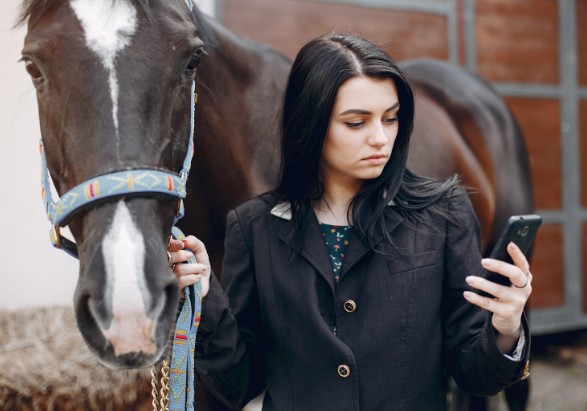
A quiet stable at night once meant guesswork. Owners relied on periodic checks and routine walks through the barn. Today, connected devices track movement, breathing, and water intake automatically. Smart stable technology has shifted from occasional use to routine management, giving horse owners measurable data instead of assumptions.
Digital monitoring tools now combine computer vision, biometric sensors, and IoT platforms into one ecosystem. According to market analyses, the global smart wearables segment for horses was valued at about $735 million in 2024 and may reach roughly $1.65 billion by 2031. Owners who review racing data, odds shifts, and form notes through dashboards such as 1xbet demo account and real often recognize the same logic in stable tech: track a baseline, watch for anomalies, then act fast when the numbers change.
Below is a practical look at the three device categories that define a modern smart stable in 2026.
AI cameras: continuous visual monitoring
In many modern barns, a compact camera now sits in the corner of each stall. These systems no longer serve as simple video feeds. Modern AI cameras analyze behavior around the clock and flag deviations within minutes.
Computer vision models can track posture, movement patterns, and activity cycles without attaching anything to the animal. Research in precision livestock monitoring confirms that non invasive video analytics can reliably observe equine activity and social behavior.
In daily practice, AI cameras typically handle several tasks at once:
- Monitor behavior patterns 24 hours a day
- Detect unusual movement linked to colic risk
- Send push alerts to a mobile app
- Record security events in the stable
Notable systems in use
NOVOSTABLE LANA is one of the more advanced examples. The system builds an individual digital profile of each horse in about twelve hours. After calibration, it analyzes behavior every minute and processes more than four million data points per horse each day. When the algorithm spots abnormal activity, the owner receives an immediate notification.
Another widely discussed solution is the ACARiS Smartbox. Instead of replacing hardware, it upgrades a standard IP camera into an AI monitoring unit. The platform can flag potential colic signs, monitor foaling activity, and trigger security alerts if unauthorized movement appears in the stall area.
When AI cameras prove most useful
Owners report the highest practical value in several situations:
- Overnight monitoring in individual stalls
- Recovery periods after surgery
- Late pregnancy and foaling watch
- Remote or partially staffed facilities
In these cases, early detection often saves hours of uncertainty and reduces emergency risk.
Wearable sensors and smart blankets
Cameras provide visual oversight, while wearables supply physiological data. This segment is currently the fastest growing part of equine technology.
Modern sensors collect biometric data continuously without requiring manual checks. Depending on the device, owners can monitor:
- Heart rate and respiration
- Body temperature trends
- Movement intensity and sleep patterns
- Gait symmetry and limb load
- Stress indicators
Veterinary researchers note that continuous biometric monitoring can reveal health issues earlier than periodic manual measurements, especially in performance horses.
Examples of current technology
HorseCare motion sensors attach to the limbs and back and sample data at rates up to 200 Hz. The system focuses on locomotion symmetry and can flag subtle gait irregularities that may precede visible lameness. Trainers often use it during conditioning blocks or after minor injuries.
Horsepal Edge takes a broader approach. This IoT tracker monitors activity, rest cycles, movement style, GPS location, heart rate, and grazing time. All metrics sync to a cloud dashboard that owners can access from any device. The result is a detailed fitness profile that updates throughout the day.
HoofStep smart halter concentrates on daily behavior. It measures feeding time, rest duration, energy patterns, and location. The system can send alerts when behavior deviates from baseline patterns that may indicate colic or laminitis risk.
The role of smart blankets
Smart blankets form a separate niche within wearables. These adaptive rugs respond to weather conditions, monitor temperature, and flag abnormal physiological patterns. Market reports show rising adoption, particularly in regions with variable climates.
Owners mainly use them to reduce manual rug changes and maintain stable thermal conditions for sensitive horses.
Smart water systems and hydration tracking
Hydration rarely gets attention until something goes wrong. Yet reduced water intake is often one of the earliest warning signs of digestive trouble.
Modern smart water solutions measure consumption in real time and log patterns automatically. Some systems integrate with broader stable management software, allowing owners to view hydration alongside activity and health metrics.
Typical capabilities include:
- Continuous measurement of water intake
- Alerts when drinking drops below normal
- Early warning support for colic risk
- Integration with feeding and health logs
The market now includes combined feed and water trackers designed for high performance barns where even small changes in intake matter.
How a smart stable works in practice
In a fully connected setup, these tools operate as one system rather than separate devices. A typical configuration includes several coordinated components.
Inside the stall you usually find an AI camera paired with environmental sensors that track temperature and humidity. On the horse, a wearable sensor or smart halter streams biometric data throughout the day. Infrastructure elements such as smart waterers feed intake data into the same dashboard.
When integrated correctly, the system helps owners:
- Detect potential health issues before visible symptoms
- Reduce the need for late night manual checks
- Maintain detailed health records automatically
- Improve overall barn security
Field studies and industry reviews agree on one point. While the technology is advancing quickly, standardization and real world validation still matter. Owners should always confirm sensor accuracy, battery life, network stability, and veterinary validation before investing.
For many barns in 2026, smart monitoring is already part of routine horse care. It has become part of routine horse care, quietly working in the background while owners focus on training, recovery, and daily management.