

How Trainers Prepare Horses for the Final Month Before the Breeders’ Cup
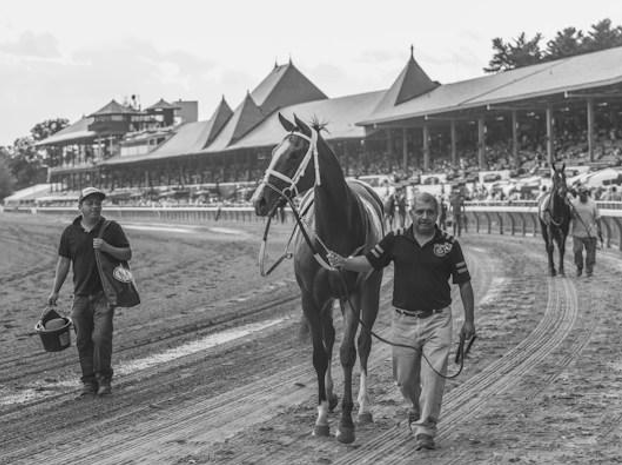
The final month before racing’s championship weekend is built around precision rather than wholesale change. Trainers already have fit horses, so attention shifts toward maintaining condition, managing travel, satisfying veterinary requirements, and keeping routines familiar.
The possible contenders are still taking shape, with pre-entries closing on 19 October and final entries following on 26 October ahead of the 30–31 October Championships at Keeneland. Until then, every workout and examination matters. For horses moving toward a possible start, those closing weeks become a carefully coordinated process designed to have everything aligned for race day.
The Final Workout Offers an Important Readiness Check
The last significant breeze provides an important opportunity to assess readiness. Many trainers schedule that move several days to roughly a week before the race, leaving enough recovery time while keeping the horse’s fitness and competitive sharpness intact.
There is no universal workout formula. One horse may complete a controlled half-mile, while another stretches to five furlongs. Trainers tailor distance and intensity around previous races, established fitness, temperament, and how much work the horse needs between starts.
The stopwatch tells only part of the story. Trainers assess several details during and after the breeze, including:
- Movement: How comfortably the horse travels through the work,
- Finish: How much energy remains through the final stages,
- Gallop-out: How strongly the horse continues beyond the finish,
- Recovery: How the horse responds once the work is complete.
Together, those observations provide a broader picture of current condition than the recorded time alone. That workout also offers a final opportunity to detect something unexpected before travel or race-week preparations intensify. Once the major work is complete, the emphasis becomes maintaining condition rather than building it, making the transition to the host track the next important stage.
Morning conditions also influence how trainers interpret the work. Track surface, weather, and training traffic provide context for recorded times. Rather than chasing a particular clocking, connections compare the breeze with the horse’s established patterns and previous successful preparations.
Settling In at the Host Track
Shipping introduces a completely different challenge. Horses leave familiar barns, routines, and surroundings as they travel to the Breeders’ Cup venue, where increased activity and an unfamiliar environment can change the rhythm of an otherwise carefully controlled preparation.
Event requirements govern arrival. For 2026, international runners must reach Keeneland by 25 October, while domestic Championship runners must arrive by 27 October. International horses also face additional quarantine and import procedures. Trainers consequently build travel schedules around both regulatory obligations and individual preferences.
Once a horse arrives, routine becomes important. Familiar feed, regular walking and training times, and consistent handling help restore the daily pattern established at home. Trainers watch appetite, hydration, behaviour, and general energy for evidence that travel has been handled comfortably.
Approaches nevertheless differ. Some trainers prefer arriving early so horses have more time to become accustomed to their surroundings. Others know particular runners perform better after later travel. Either approach ultimately leads into another tightly controlled area of preparation: medication and veterinary compliance.
Managing Medication and Veterinary Rules
The final month is governed by detailed veterinary requirements that influence training schedules well before Championship week. Treatment decisions must account for withdrawal periods as trainers work within rules established for horses preparing to compete.
Under current HISA rules, an intra-articular injection generally prevents a horse from working for seven days and racing for 14 days. A corticosteroid injection into a fetlock carries the stricter stand-down of 14 days before a workout and 30 days before racing.
Other medications also interact with training schedules. Withdrawal and stand-down requirements vary according to the substance, method of administration, dose, and applicable HISA or HIWU rules. Trainers and attending veterinarians therefore need to coordinate treatments with planned breezes rather than considering race day in isolation.
Documentation is equally important. Veterinary records must be submitted as required, while out-of-competition testing remains part of the pre-Championship veterinary oversight for potential runners. With those requirements addressed, attention increasingly shifts from medical scheduling toward behaviour, surroundings, and race-day procedures.
Schooling in the Paddock and Gate
Fitness alone cannot prepare a horse for everything it will encounter during Championship week. The paddock, starting gate, crowds, and unfamiliar surroundings introduce different stimuli, making behavioral preparation another part of the final build-up.
Paddock schooling provides horses with opportunities to experience the area before race day. Breeders’ Cup starters receive priority during designated sessions, allowing trainers to familiarize runners with an environment that becomes considerably busier once the Championship races begin.
Gate schooling provides another practical rehearsal. Scheduled morning sessions let horses enter the stalls, stand quietly, and practice the routine of breaking from the gate. Trainers can use those sessions according to each horse’s individual needs.
Such preparation may be particularly useful for younger runners and horses making their first Breeders’ Cup appearance. Familiarity cannot recreate race-day intensity, but it can reduce some of the novelty. Veterinary observation then provides another layer of scrutiny as competition approaches.
The Jog-Up Exam and Final Checks
Race-week veterinary examinations turn attention toward soundness. Breeders’ Cup runners undergo mandatory observation, including a jog-up that must be completed before they are permitted to train on the racing surface, allowing veterinarians to evaluate each horse’s movement.
These checks are not confined to a single inspection. Veterinary oversight continues in the days leading up to competition, creating repeated opportunities to identify changes that may require additional attention before a horse is cleared to proceed.
Trainers conduct their own daily assessments alongside those formal examinations. Feed consumption can indicate whether routine remains normal, while energy, movement, hydration, and coat appearance provide additional observations about how the horse is handling its surroundings and workload.
Any irregularity can trigger closer evaluation. That makes the closing days less about adding fitness and more about confirming that previous preparation has held together. By this stage, the significant workouts are complete and attention turns to maintaining a settled, consistent routine.
Preparation Comes Down to Detail
The final month before the Breeders’ Cup demonstrates how many elements must align before a horse reaches the starting gate. Fitness remains fundamental, but travel, veterinary protocols, schooling, examinations, and daily behavior all contribute to the preparation.
Trainers cannot manufacture peak condition during Championship week. Instead, they refine work completed over previous months and watch closely for changes. By race day, the most visible preparation may already be finished, leaving routine and careful observation to carry each confirmed runner through the final days.