

How Horse Racing Odds Are Actually Calculated
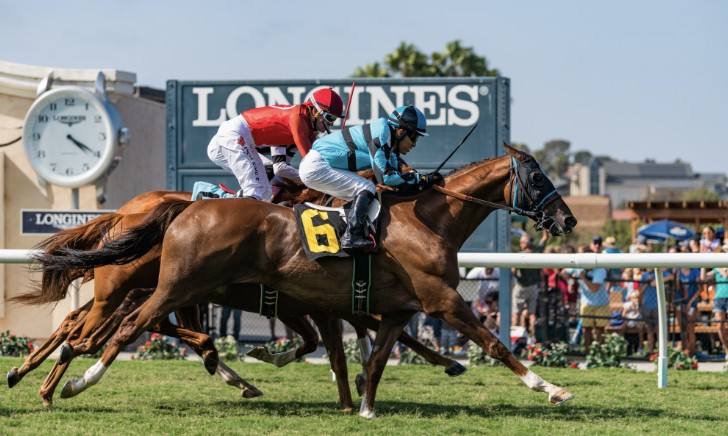
The odds flashing beside a horse’s name look like a confident prediction of how the race will unfold. They are nothing of the sort. They are a price, shaped by money and mathematics, and the way that price is calculated depends entirely on where and how you place the bet.
There are two completely different systems at work behind those numbers, and they arrive at a price in opposite ways. Knowing which one you are betting into changes how you read every figure on the board.
Two Completely Different Systems
The first surprise for many newcomers is that horse racing odds are not always set by a bookmaker at all. In much of the world, and especially at the track itself, prices come from a pooled system where bettors are effectively wagering against each other.
The alternative is the fixed-odds model familiar from other sports, where a bookmaker offers a price and you lock it in. These two systems, pari-mutuel pools and fixed odds, produce numbers that look identical but are built on entirely different foundations.
Both come down to the same underlying idea, which is turning a probability into a price with a margin built in. It is the same logic that lets you judge the value of any offer, whether a horse’s price or a hidden jack promo code, once you know how to read what the number is really telling you. The odds are a market price first and a prediction only a distant second.
How The Tote Sets A Price
In the pari-mutuel system, also called the tote, there is no house line to beat. Every bet of a given type goes into one shared pool, and a horse’s odds are simply its share of that pool, so the more money piled onto a runner, the shorter its price becomes.
This is why tote odds keep drifting and shortening right up to the start, updating on the board every sixty to ninety seconds. Importantly, your payout is set by the final odds at post time, not the price showing when you placed the bet, so a horse can look generous early and pay far less by the off.
The Cut Called Takeout
Before any winnings are shared out, the track removes a slice of the entire pool, known as the takeout. On straightforward win, place and show bets this is often in the region of fifteen to twenty-five per cent, climbing higher on exotic bets like exactas and multi-race tickets.
That deduction is the real cost of tote betting and the reason the average punter loses over time, since every dollar wagered returns only a fraction to the pool before winners are paid. You are not fighting a bookmaker here; you are competing with the crowd for what is left after the track has taken its share.
How A Bookmaker Sets A Price
Fixed-odds betting works in the opposite direction. Here a bookmaker prices every runner in advance, you take the odds offered at that moment, and your return is locked in regardless of how the market moves afterwards.
To make a profit, the bookmaker builds a margin into the whole race, known as the overround. If you convert every horse’s odds into an implied probability and add them up, the total comes to more than one hundred per cent, often somewhere between one hundred and fifteen and one hundred and thirty in a competitive field.
That extra slice above a fair hundred per cent is the bookmaker’s equivalent of the tote’s takeout. Betting exchanges, where punters bet against each other rather than a bookmaker, tend to run a much tighter book, which is why their prices are frequently sharper close to the off.
Reading The Different Formats
Whichever system sets the price, it can be displayed in several formats that trip up beginners despite meaning exactly the same thing. The three you will meet most often are fractional, decimal and American.
| Odds format | What 5/1 or its equal looks like | What it means |
|---|---|---|
| Fractional (UK, Ireland) | 5/1 | Win five units of profit for every one staked, plus your stake back |
| Decimal (international) | 6.00 | Multiply your stake by 6 for the total return, stake included |
| American (moneyline) | +500 | A 100 unit stake wins 500 in profit |
The key is not to be thrown by the presentation, since 5/1, 6.00 and +500 all describe an identical bet. Fractional odds show pure profit, decimals fold your stake into the figure, and once you can switch between them the board stops looking like a foreign language. Strong favourites flip the fraction around into what is called odds-on, so a price of 2/5 means staking five to win two, a reminder that short prices still carry the same underlying maths.
Turning Odds Into Probability
The most useful skill a bettor can learn is converting odds back into the probability they imply, because that is what reveals whether a price offers value. The maths is refreshingly simple in both major formats.
For decimal odds, you divide one by the price, so a horse at 6.00 implies a win chance of about sixteen point seven per cent. For fractional odds, you divide the second number by the sum of both, so 5/1 becomes one divided by six, landing on the same sixteen point seven per cent.
This conversion is where sharp betting begins, because it lets you compare the market’s opinion against your own. If you believe a horse has a better chance than its implied probability suggests, the price is arguably too generous, and that gap, not a hunch, is what experienced bettors actually hunt for. It also exposes the built-in margin at a glance, since adding up every runner’s implied probability shows just how far above a fair hundred per cent the book has been set.
What Makes The Price Move
Odds are rarely still, and the drifting and shortening you see reflects a constant tug of war beneath the surface. A price is a living market reacting to fresh information and fresh money in real time.
Several forces push a horse’s odds around:
- Weight of money — heavy backing shortens a price, while a lack of interest lets it drift out.
- Fresh information — news on the going, a jockey change or how a horse looks in the parade ring all feed in.
- Informed bets — a sudden confident plunge, often called a steam move, can signal money that knows something.
- Copycat moves — once one major bookmaker cuts a price, others often follow to protect their own book.
None of these movements is a guarantee, and a late drift does not always mean a horse has gone cold. They are signals to weigh rather than instructions to follow, which is exactly why reading the market well is a skill rather than a formula.
The Price Behind The Prediction
Horse racing odds are not a crystal ball but a calculated price, produced either by a shared pool splitting money between runners or by a bookmaker pricing a race with a margin baked in. Both take a probability, add a cut for the house, and hand you a number that carries far more information than it first appears to.
Once you can turn that number into a probability and see the margin sitting inside it, the board becomes a map of what the market believes rather than a mystery. Betting always carries real risk, so anyone who finds their play becoming hard to control can seek free, confidential support from services such as GamCare or the National Council on Problem Gambling.
FAQ
Who actually sets horse racing odds?
It depends on the system. In pari-mutuel or tote betting, the odds come from how the betting pool is divided among runners. In fixed-odds betting, a bookmaker sets and offers the price directly.
What is the difference between tote and fixed odds?
Tote odds fluctuate until the race starts and pay out at the final pool price. Fixed odds are locked in the moment you bet, so later market movements do not change your return.
How do I convert odds into a probability?
Divide one by the decimal price, so 6.00 implies about 16.7 per cent. For fractional odds like 5/1, divide the second number by the sum of both, which also gives 16.7 per cent.
Why do the odds change before the race starts?
Prices move with the weight of money and new information, such as going reports or jockey changes. In tote betting the pool constantly rebalances, while bookmakers adjust prices to manage their risk.