

How Different Racecourses Change the Way a Horse Race Unfolds
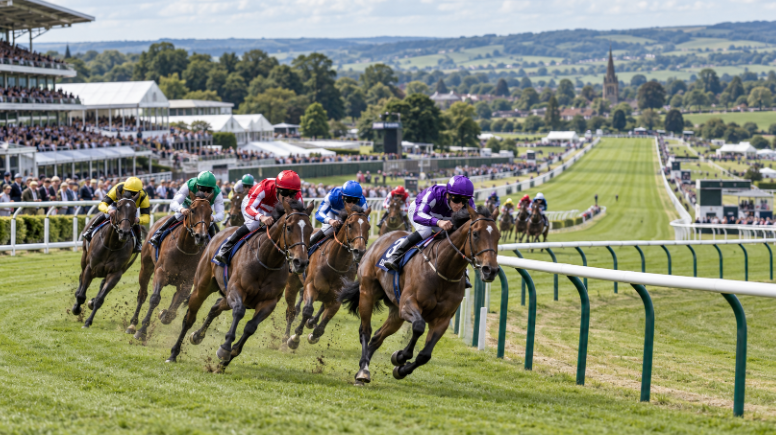
A mile is still a mile, but it does not ask the same question everywhere. British racecourses can be tight, flat, rolling or sharply cambered, and those differences affect where jockeys want to sit and when they make their move. Put the same field on another track and the race may look surprisingly different.
Chester Leaves Little Room to Wait
Chester offers the clearest example of a racecourse shaping tactics. Its left handed circuit measures roughly a mile around, the bends come quickly, and the straight after the final turn runs for less than two furlongs. A horse that enters that stretch badly positioned has precious little time to repair the damage.
That geometry also helps explain why the draw receives so much attention there, especially over five furlongs. In July 2026, Chester even introduced a trial that offered extra prize money to winners starting from higher stalls in selected five furlong races, an attempt to address the perceived advantage enjoyed by low draws. Anyone checking pre race prices on the 1xBet official site may therefore see the stall number discussed alongside recent form and ground conditions.
For the jockey, Chester rewards decisions made early rather than heroic rescue attempts late. Position matters before the final bend, and getting trapped behind rivals can become expensive in seconds.
Three features stand out:
- Tight turns make balance and positioning unusually visible.
- The short home straight limits the time available for a late challenge.
- A low draw can matter greatly in some sprint races, although its value still depends on the field and race conditions.
There is nowhere to hide a badly timed move. Chester tends to expose it immediately.
Epsom Makes Balance Part of the Contest
Epsom presents a completely different problem. The Derby course rises early, drops towards the straight and asks horses to negotiate the famous Tattenham Corner before meeting a cambered finishing section. Derby winning jockey Johnny Murtagh has described the track in exactly those terms, uphill at the start, downhill into the straight, then the camber.
That means raw speed alone cannot settle every argument. A horse also has to remain organised as the ground changes underneath it, while the jockey must judge pace without treating the course like a level strip of grass.
A runner at Epsom may have to cope with:
- climbing during the earlier part of the race
- changing balance as the field descends
- negotiating Tattenham Corner before the final run
- handling the camber while pressure rises near the finish
Trainer Michael Bell has called Epsom an “ultimate test” and stressed balance, cruising speed and temperament. The description fits what spectators can see. Some horses travel smoothly through the awkward sections. Others suddenly look far less comfortable.
York Gives Gallopers Time to Build
York feels more generous by comparison. The racecourse describes its track as flat and fair, with the round course feeding into a home run of almost five furlongs. That is close to 1,000 metres after the final bend, a long stretch for a horse to gather momentum.
A jockey can therefore approach the finish differently. There is usually more time to settle into a rhythm, bring a powerful galloper into contention and sustain a challenge rather than squeeze everything into one brief burst.
The contrast with Chester is striking. One course keeps asking, “Where are you right now?” The other gives a horse rather more time to answer.
York also runs its shortest sprint races on a straight course. Without a tight sequence of turns dominating the contest, pace distribution, ground and where groups form across the width of the track can become more noticeable to the viewer.
Newmarket Shows What a Long Straight Changes
Newmarket pushes the idea even further. The Jockey Club describes the Rowley Mile as the longest straight in world racing, while the town’s second track, the July Course, provides a different summer test and includes a stiff uphill finish.
A long straight changes the visual rhythm of a race. Jockeys can spend more time judging rivals beside them, while horses must keep producing their effort without a final bend creating an obvious moment to attack.
For a newcomer watching British racing, a useful habit is to check three things before the start:
- Look at the course shape and find out how much turning the horses face.
- Check the length and gradient of the finishing straight.
- Then consider the draw and going in the context of that particular track.
The names on the racecard may stay the same, but the stage does not. Chester compresses decisions, Epsom tests balance, York gives gallopers room, and Newmarket can make sustained speed painfully obvious. That is why knowing the racecourse often explains a race better than staring at the finishing order afterwards.