

Managing Delays Between Show-Jumping Warm-Up and Arena Entry
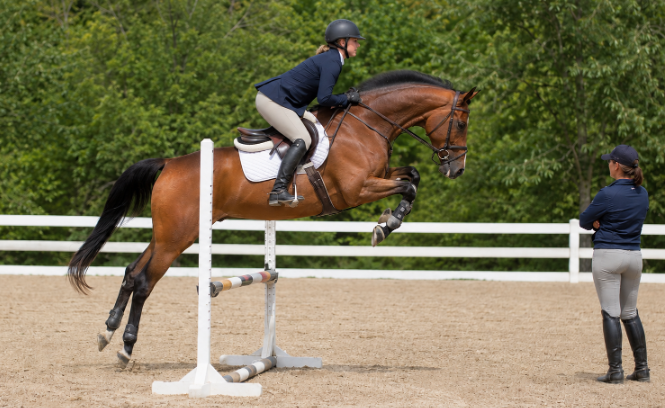
The Seconds Between the Last Warm-Up Fence and the Ring
A horse lands neatly beyond the final practice fence. The rider gathers the canter, the trainer nods, and somebody at the gate calls for another competitor. Then the course crew steps into the arena. A rail needs replacing, the entrance remains closed, and a carefully timed finish suddenly becomes a wait.
That short interval deserves its own plan. A successful warm-up must leave enough energy and attention for the course, while allowing for a schedule that can change after the horse has already jumped its last fence.
Being Ready Does Not Open the Gate
The trainer manages preparation; the in-gate staff manage access and running order. Confusing those responsibilities creates avoidable pressure. Being listed next does not establish precisely when the arena will become available, particularly when a previous round requires an interruption.
The practical response is communication. One ground person can check the gate while the trainer watches the horse. That arrangement gives the rider useful information without several people shouting competing instructions across a busy schooling area.
Clear division of responsibility matters in online casino operations as well. At an online casino, the operator manages account access, bonus eligibility and the casino balance, while the game provider supplies the slot software and returns the round result after each accepted wager. The casino wallet records each slot stake, bonus credit, round payout and withdrawal. Support handles questions about wagering history, keeping real-money gameplay and account administration under separate controls.
Count Horses, Then Check What Is Happening
“Three before us” is useful information, but it remains a position rather than a countdown. If one of those competitors withdraws from the class, the wait becomes shorter. A damaged fence, loose horse or technical interruption can extend it. Even an accurate running order cannot predict every pause.
Before committing to the final jumping effort, the team needs a few concrete answers:
- Which combination is currently competing, and who is actually waiting?
- Is the arena operating normally or under a hold?
- Does the class allow the next combination to enter before the previous horse leaves?
- How long does the route between schooling fence and entrance take?
These checks help explain why watching only the results screen is insufficient. The gate has information about access; the schooling ring provides information about the horse. Both belong in the decision.
The Last Fence Should Answer a Question
The final effort has a purpose: confirming that the horse approaches in a usable rhythm, responds to the rider and remains manageable after landing. Fence height alone cannot establish those qualities. A spectacular jump followed by a hurried, unbalanced turn may leave an unresolved issue.
The FEI’s four-point warm-up checklist includes looseness and responsiveness among its priorities. It also distinguishes a horse that answers the aids from one that merely moves energetically. Those criteria provide a more useful assessment than counting practice fences without considering their quality.
For example, a horse that lands running may need its response to a quiet downward transition assessed before another approach. A horse already travelling in balance may gain little from repeating an effort solely because the previous take-off looked untidy. The trainer’s judgement concerns what remains necessary for this particular combination.
A Delay Needs a Different Plan
A brief hold does not automatically justify another fence. Nor does it mean every horse should stand motionless beside the entrance. The next step depends on the available space, the horse’s behaviour and the likely duration of the interruption.
The distinction becomes clearer with two possible scenarios. An experienced horse may remain settled while walking quietly away from traffic. A more reactive horse may become increasingly distracted near an entrance crowded with departing competitors. Neither situation supplies a universal prescription; both require observation.
The response to a hold can be organised around three decisions:
| Decision | Practical response |
| Where to wait | Choose a permitted area clear of approaches, landing zones and passing horses. |
| What to maintain | Preserve comfortable movement, attention and an appropriate response to the aids. |
| When to reassess | Review the preparation after a meaningful delay or a clear change in the horse’s way of going. |
An additional jump should answer an identified need. Filling spare minutes with repeated efforts can turn a completed preparation into another schooling session, with the competition still ahead.
The Entrance and the Start Are Separate
Permission to enter also needs careful interpretation. In a May 2026 jumper-ring rules refresher, Equestrian Canada senior judge Christine Reupke explains that preloading gives the next competitor extra arena time only when permitted. She warns that an incoming rider can accidentally interfere with the active competitor’s finish timers.
The article also describes the 45-second starting countdown used in that rules context: after the signal, the round timer begins if the rider has not crossed the start line before the countdown expires. Applicable competition rules must be checked; hunter classes should not be treated as interchangeable with jumper classes.
Consequently, the final approach begins with orientation. The rider needs to know where the start lies, where the previous horse is leaving and how the opening turn will establish the canter.
The best last practice jump leaves the pair ready for that task. Once its purpose has been achieved, managing the interval matters more than manufacturing another perfect photograph over a warm-up fence.